

Network Lightning Protector SPD Monitor Camera Surge Protector RJ45 Gigabit Ethernet Protection Device Arrester
Default Title
$29.48
Sale price
$29.48
Regular price
$0.00
Skip to product information




Network Lightning Protector SPD Monitor Camera Surge Protector RJ45 Gigabit Ethernet Protection Device Arrester
$29.48
Sale price
$29.48
Regular price
$0.00
Description
SPECIFICATIONS
Assembly Required: no
Brand Name: NONE
Choice: yes
High-concerned chemical: none
Origin: Mainland China
Type: Cable Adapter
Scope of application:
Suitable for computer data interface or network interface, hub, network card, network switch, modem, fax, data communication, etc. The over-voltage protection of network system is protected from induced overvoltage, operating overvoltage and electrostatic discharge. Damage; multi-stage protection, large current capacity, low voltage limit, fast response time, low insertion loss, high transmission rate, etc.
Why use a surge protector?
The destructive power of lightning is extremely large. It is not enough to rely solely on external lightning protection (lightning rods, etc.). Lightning waves indirectly or indirectly (through electromagnetic induction) invade electrical passages and metal passages (such as power lines, signal lines, antenna feeders and metals). Pipes, etc.). The resulting lightning overvoltage and surge voltage will cause great harm to electronic, electrical equipment, and information network systems. If the line is damaged, the equipment will be damaged and the system will be paralyzed, resulting in an incalculable loss.
Rapidly changing lightning currents can induce high voltages on electrical loops and twin-wires that can damage the insulation of the system. Various operations of the power system can generate operating overvoltage on the power line; some electrical equipment switching operations, short circuit trips, etc. can generate overvoltage (surge voltage) higher than the normal working voltage in the power line, thereby causing damage to the electrical equipment. .
Technical Parameters:
Model RJ45 network signal lightning arrester
Protected object network signal
Rated working voltage Un: 5V
Maximum continuous operating voltage Uc: 7.8V
Maximum discharge current Imax (8/20us): 10KA
Impact limit voltage Up (10/700/ms): <20V
Insertion loss: 0.1dB
Response time: ~1ns
Protection pin: 1/2/3/6
Maximum transmission rate: 100MHz
Connector form: RJ45
Operating temperature range: -40 ° C ~ +85 ° C
At room temperature: humidity 30%-90%
Shell protection rating: IP20
Insulation resistance MΩ: ≥0.4
Near-end crosstalk dB: ≥ 60 (PASS)
Bandwidth FG: 100 M
Protection line: single way
Installation instructions and precautions:
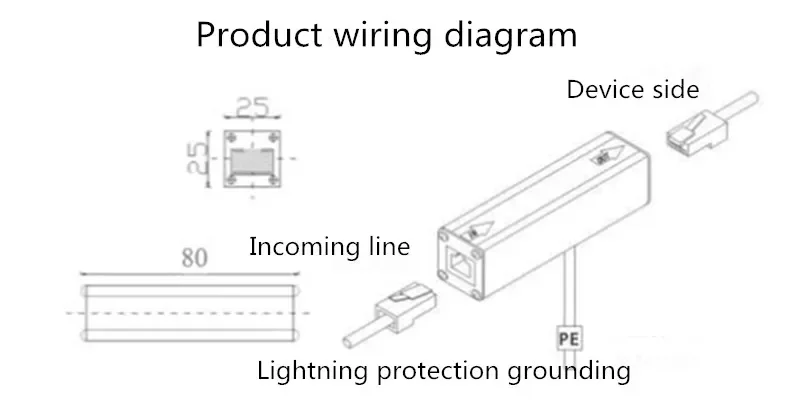
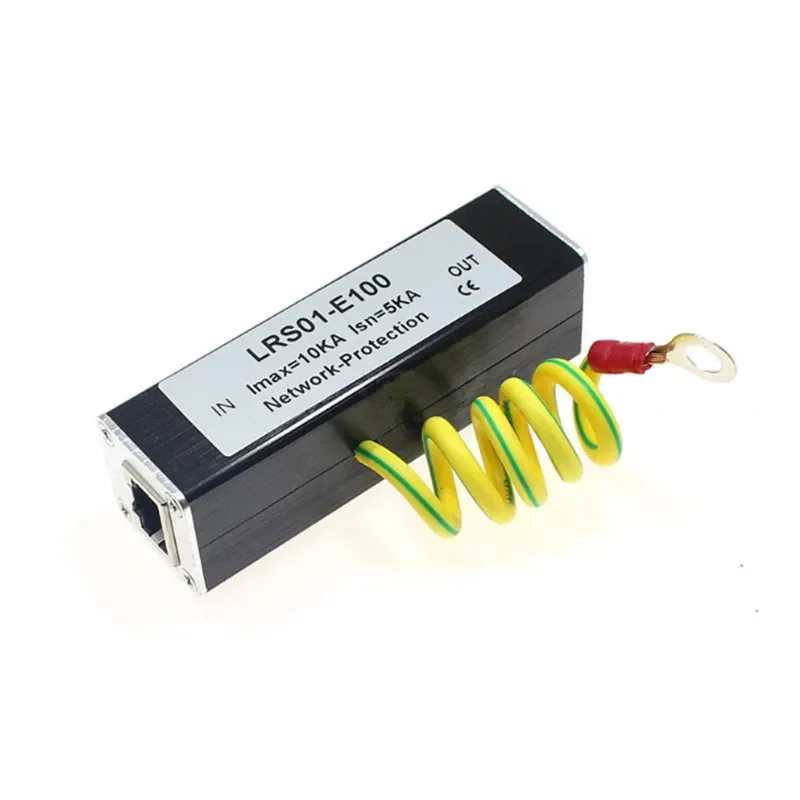
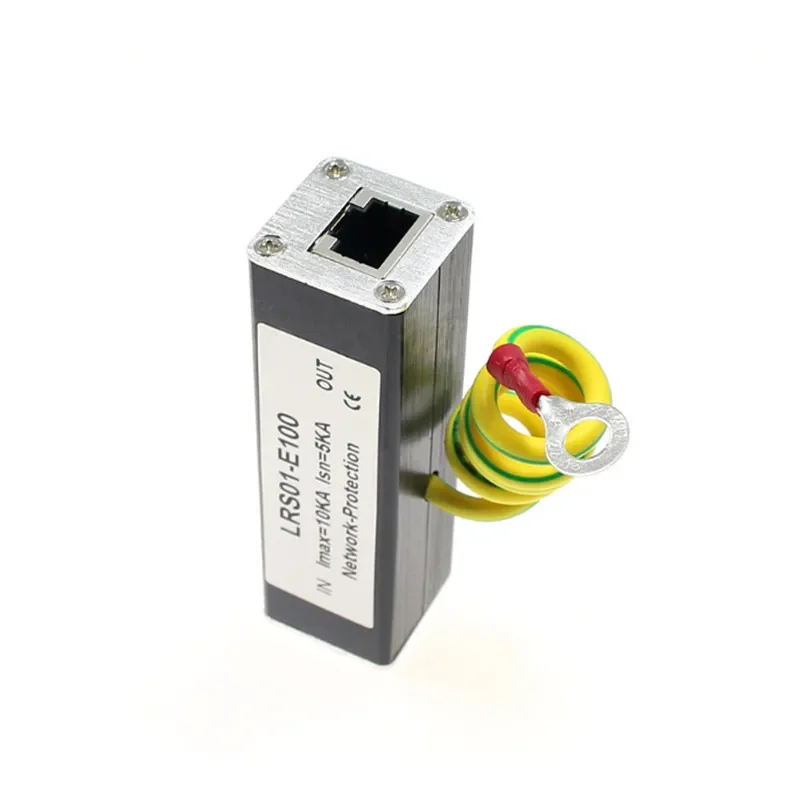
1) Installed in series between the lines of the protected equipment, the interface connection must be reliable, and the surge protector has input (IN) and output (OUT) marks. The output is connected to the protected device and must not be connected. Otherwise, the lightning protector will be damaged when lightning strikes, and the equipment will not be effectively protected.
2) If the loss increases due to factors such as poor connection of the connector, reconnect or replace the protector.
3) Disconnect the equipment when installing the grounding wire to avoid damage to the equipment caused by strong current such as electric welding from the grounding end.
4) Before the surge protector string is connected to the protected device, the power must be turned off and the live operation is prohibited.
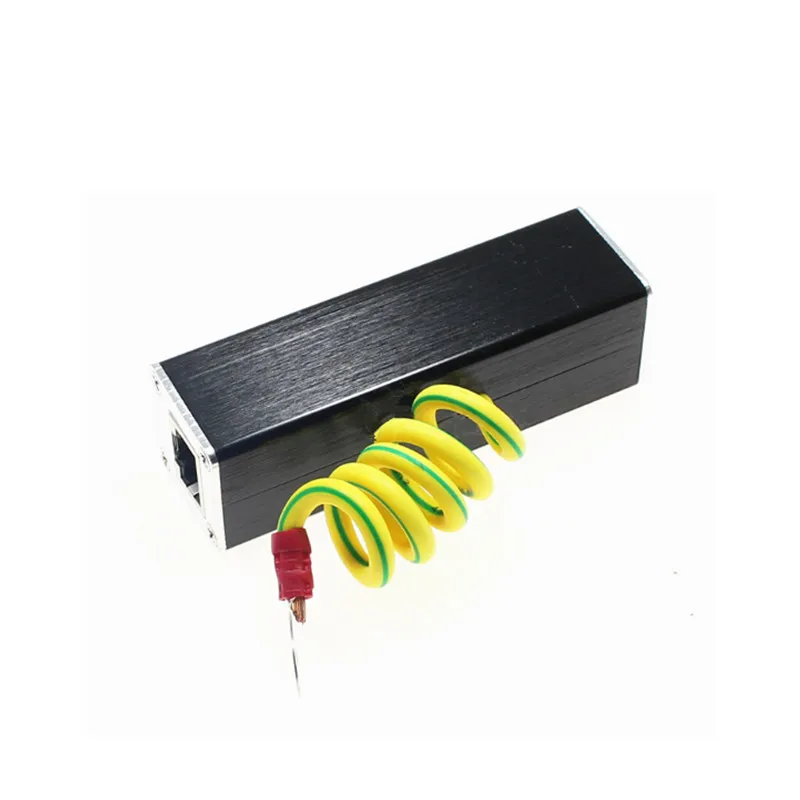
5) The grounding wire (PE) must be reliably connected to the ground of the surge protection system and the shortest length is required for optimum protection.
6) Users are not allowed to disassemble the fasteners in various parts of the protector to avoid damage and affect normal work.
Check of the protector:
1" Use the three-meter "Ω × 1" file to measure the corresponding input to the output resistance value of about 0 Ω, if the resistance is too large and abnormal, the protector should be replaced.
2" Use the three-meter "Ω × 10K" file to measure the resistance of the wire to the outer casing, which is about 400kΩ; the resistance of the wire to the ground and the outer casing to the ground should be infinite. If the measured resistance does not match the above, the protector should be replaced.
3) The lightning protection device does not need special maintenance, such as being damaged by high voltage and lightning strikes. (When the LED indicator is off, it indicates that the lightning protection function has been lost.) When the system equipment fails, the lightning protection device can be removed to see if the equipment works normally. If it can be restored to normal, the lightning arrester is damaged and the protector should be replaced.
Free Shipping Over $199
- Standard Shipping: Standard Shipping (12–18 Business Days)
- Express Shipping: Expedited Shipping (5–9 Business Days)
- Free Shipping: Orders over $199 qualify automatically
- Tracking: Full tracking number provided for all orders
30-Day Return Policy
- Returns: 30-day hassle-free return window
- Condition: Items must be unused and in original packaging
- Refund: Full refund processed within 3-5 business days
Why Choose Us?
- Factory Direct: ISO/TS 16949 certified manufacturer
- Quality: 100% electrical continuity tested before shipment
- Experience: 15+ years in automotive connector industry
- Support: Professional technical support available

You may also like
Blog posts
Title
An excerpt of your blog post's content
Title
Date|Author
Subscribe to our emails
Be the first to know about new collections and special offers.